

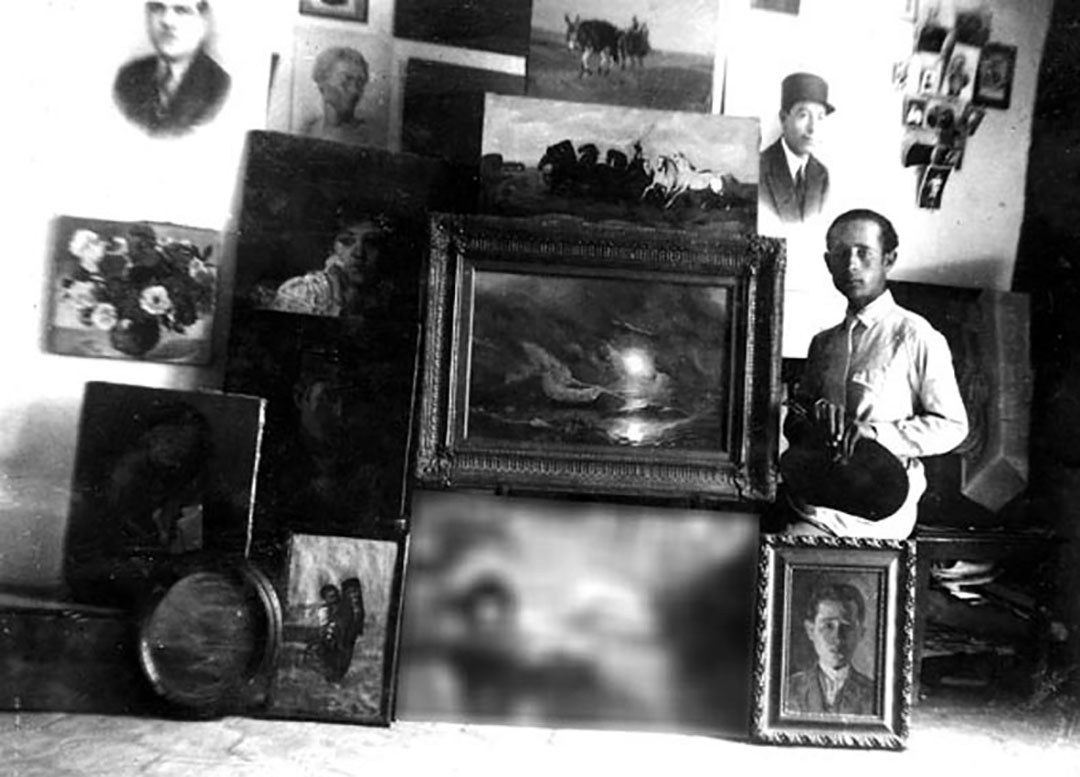
The Petgar Family: Pioneers of Social Realism and a Bridge Between Generations
The Petgar family is regarded as one of the significant and influential figures in contemporary Iranian painting, playing a fundamental role in the continuity and transformation of authentic Iranian art. This family—especially Ali-Asghar and Jafar Petgar—despite being overlooked by dominant modernist currents, pursued an independent artistic path that balanced between academism and modernism, maintaining a strong connection to their original artistic roots.
Ali-Asghar Petgar (1913–1992)
Ali-Asghar Petgar, a contemporary Iranian painter, was born in 1913 in Tabriz. After completing his primary and secondary education, he enrolled in 1928 at the School of Fine Arts of Azerbaijan to study painting under the guidance of Master Mirmasoud Arzhangi and to learn the principles of the visual arts. This marked the beginning of a new era in contemporary Iranian painting and a turning point in his life. In 1933, Ali-Asghar, along with his brother Jafar, migrated from Azerbaijan to Tehran to pursue foundational training and to learn modern painting techniques. In 1934, he enrolled at the New School of Fine Arts, where the foremost students of Kamal-ol-Molk taught the fundamentals of painting. Prior to this, he had also studied miniature painting at the Old School of Fine Arts under Master Taherzadeh Behzad.
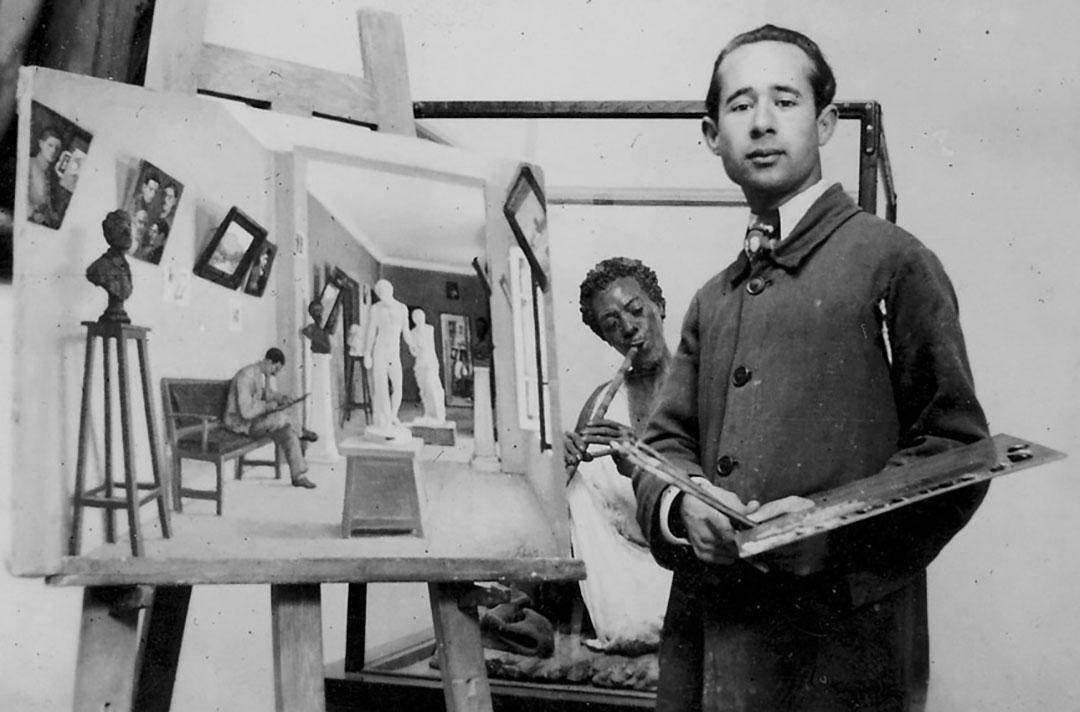
These diverse educational experiences and his use of both traditional and contemporary Iranian art techniques encouraged Ali-Asghar Petgar to develop a penetrating and critical outlook in his works. He is considered a leading figure in the new educational methods inspired by Kamal-ol-Molk, yet with a distinct and unique perspective. Social realism and critical observations of his surroundings constitute the main themes of his paintings, which he articulated through many of his works.In 1937, after completing their apprenticeship and gaining teaching positions, Ali-Asghar and Jafar Petgar had to cease their studies due to difficult social and economic conditions and began earning a living by teaching painting. During these years, the two brothers changed their family name from “Akbari” to “Petgar.” They established a studio on Manouchehri Street—a hub for artists, writers, and filmmakers—where they taught painting.
In 1944, Ali-Asghar Petgar married Irandokht Sotoudeh. They had two sons, Nami (born 1945) and Nima (born 1946), both of whom are now renowned figures and masters in contemporary Iranian painting. Under their father’s tutelage, they learned the principles and foundations of art, later mastering modern painting techniques and producing works with critical perspectives and themes addressing social, political, and cultural issues.
Despite the wave of “New Look” and Western influences in Iranian painting, Ali-Asghar Petgar addressed social issues in Iran with an Eastern artistic viewpoint and regarded loyalty to Kamal-ol-Molk’s school as a cornerstone of his artistic vision.
Although his and his brother’s methods, which they taught and promoted, were not favored by critics and advocates of imported art during their lifetimes—resulting in unintended silence around their contributions—the persistence and social engagement of these two masters have had a profound social impact on the continuation of authentic Iranian painting up to today.Ali-Asghar Petgar passed away on May 7, 1992, at the age of 79 due to illness, marking the end of his last painting class. In his works, elements such as beauty, nature, women, children, family, color, light, perspective, Iranian geography, and the themes of his contemporary life—portrayed through the weary, sun-kissed faces of Iranian people and the joyful children of the land—formed the semantic and visual identity of his art.
The men in his paintings are portrayed as steadfast and determined individuals, while the women embody purity, beauty, and radiance. Men are depicted in social settings of work and activity, while women in most of Ali-Asghar’s works hold a grand, maternal, heroic, and beautiful status.An exhibition of his selected works at Herandi Gallery offered a valuable opportunity to understand the artist’s mental world and his conception of the artist’s duty and commitment in his era.
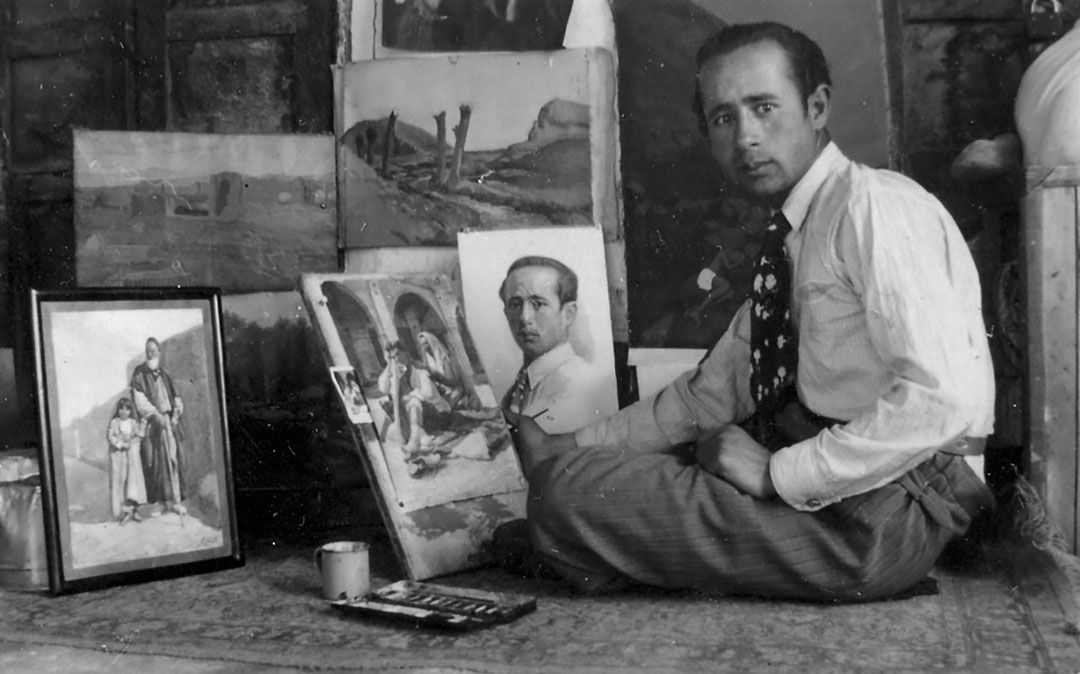
Master and Student: Examining Mehri Akbari’s Works and Their Connection to Petgar’s Painting
Master Ali-Asghar Petgar was the painting instructor of Mehri Akbari. A study of these two artists’ works reveals a significant correlation in their artistic perspectives and techniques, especially in their approach to subject matter and chosen themes. Building upon the Petgar family’s artistic tradition and their social realism, a closer examination of Mehri Akbari’s paintings shows how she absorbed her master’s teachings and transformed them uniquely.
Like Petgar, Akbari’s paintings are deeply rooted in realism and an emotional connection to her subjects. Both artists possess a keen eye for detail and a remarkable talent for depicting the inner lives of their characters. In Petgar’s works, there is a focus on the strength and resilience of the Iranian people, particularly through his portraits of working men and dignified women. His women are not merely passive figures but heroic mothers filled with light and dignity.
Similarly, Mehri Akbari’s works often portray the raw and sincere emotions of her subjects. She uses her brush to explore the human condition, capturing moments of reflection, challenge, and joy. The influence of Petgar’s emphasis on “beauty,” “nature,” and “color” is evident in her vibrant use of light and her ability to bring canvases to life. Her mastery of perspective and precise attention to composition can be attributed to the foundational principles taught by her master.
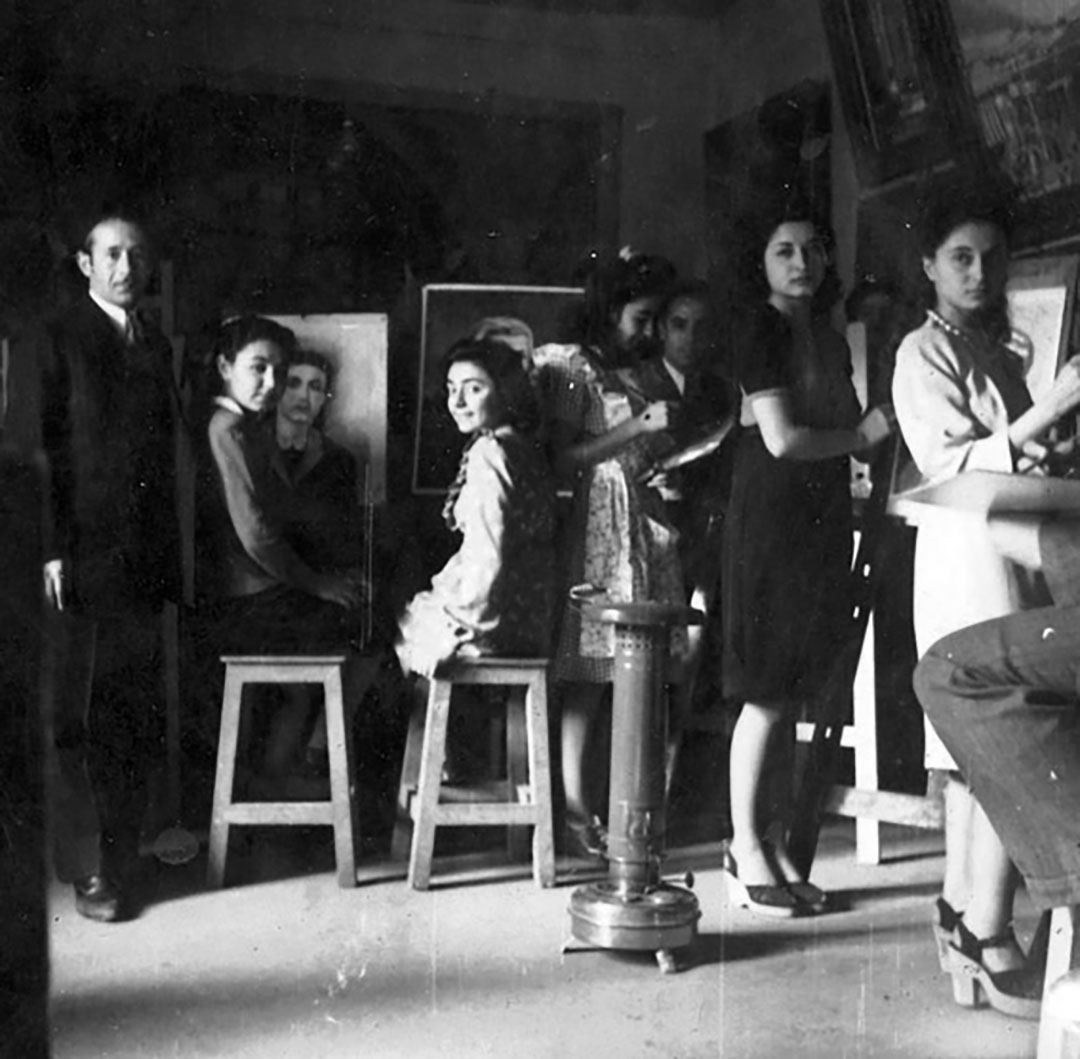
However, Akbari’s art is not merely an imitation of Petgar’s style; it represents an evolution. While Petgar’s focus was on broad social realism, Akbari often brings a more intimate and personal perspective to her works. She attends to the emotional space of her subjects, creating a psychological depth that resonates with viewers. This attests to the fact that Petgar’s teachings were not about copying but about understanding the world and expressing it through a unique artistic voice. The continuity between their works lies not only in their shared technical skills but also in their mutual respect for humanity, commitment to authenticity, and dedication to portraying truth.